The 432Hz converter allows users to adjust the pitch of audio files in bulk, enabling efficient batch processing even though maintaining sound quality and integrity.
Batch audio adjustment capabilities represent a significant advantage of using a 432Hz converter. Such functionality allows users to process multiple audio files simultaneously, saving time and increasing productivity. This is particularly beneficial for artists and producers who work with large collections of music or sound samples. Instead of adjusting each file individually, the batch processing feature streamlines the workflow, enabling rapid conversion to the desired pitch across an entire library of audio assets.
The technical aspects of a 432Hz converter involve complex digital signal processing techniques. These converters analyze the waveform of the audio signals and apply pitch shifting methods that preserve the harmonic characteristics of the original material. Advanced algorithms take into consideration factors such as phase coherence and amplitude balancing, ensuring that the resulting sound remains rich and full. This attention to detail is vital for maintaining the quality of the audio, especially in professional settings where sound fidelity is paramount.
Furthermore, the flexibility of a 432Hz converter extends beyond simple frequency adjustment. Some converters include equalization and sound enhancement features, allowing for further customization of the audio output. Users can tailor the sound to fit specific musical styles or personal preferences, making these tools versatile for a range of applications. The ability to fine-tune audio quality during still converting to 432Hz can lead to highly satisfying results for both creators and audiences alike.
In live performance scenarios, a 432Hz converter can also be instrumental. Musicians often seek to create a unique auditory experience that reverberates with their audience. By utilizing a converter in real-time, performers can make certain that their music aligns with the 432Hz tuning, augmenting the overall atmosphere of the event. The integration of such technology into live performances can transform how music is experienced, creating an immersive environment that engages listeners on a deeper level.
The use of a 432Hz converter is not limited to professional settings. Amateur musicians and hobbyists can also benefit from these tools. Many software applications now offer user-friendly interfaces, making it accessible for anyone interested in examining different tuning systems. This democratization of technology encourages creativity and experimentation within the music community, allowing for a broader awareness of sound and its emotional impact.
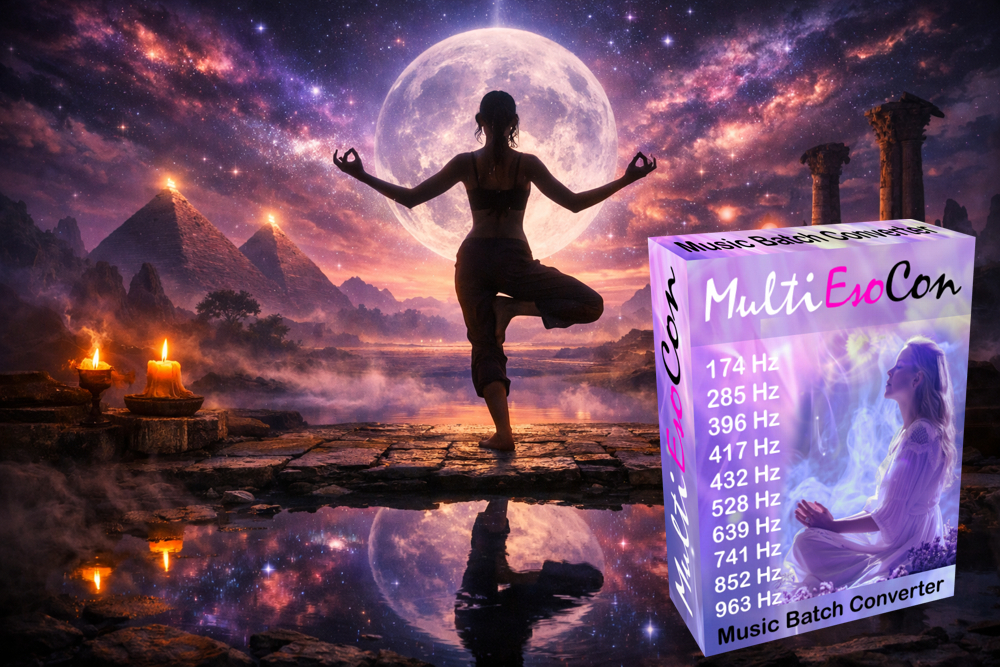
Observing the Functionality of a 432Hz Converter for Batch Audio Adjustment
The 432Hz frequency has been praised for its harmonizing effects and soothing qualities in music. Converting audio files to this frequency can improve listening experiences. Using a 432Hz converter for batch audio adjustment offers numerous functionalities that streamline the audio editing process. Below, we outline some critical features and positive aspects of using such a converter.
- Batch Processing Capability: Adjust multiple audio files simultaneously, saving time and effort.
- High-Quality Output: Assure that the converted audio maintains its original quality without distortion.
- User-Friendly Interface: Easily navigate the software with intuitive controls and settings.
- Customizable Settings: Adjust pitch, speed, and other parameters according to user preferences.
- Multiple Format Support: Convert audio files in various formats, including MP3, WAV, FLAC, and more.
- Real-Time Preview: Listen to a sample of the adjusted audio before final conversion.
- Batch Renaming: Automatically rename files post-conversion to include “432Hz” in the filename.
- Metadata Preservation: Maintain ID3 tags and metadata intact during the conversion process.
- Advanced Filtering: Apply filters to improve audio quality and remove noise or unwanted frequencies.
- Cross-Platform Compatibility: Available for use on multiple operating systems, including Windows, Mac, and Linux.
- Integration with DAWs: Easily integrate with Digital Audio Workstations for unbroken workflow.
- Volume Normalization: Automatically adjust the volume levels of different tracks to achieve consistency.
- Batch Logging: Generate logs of all conversions for records and troubleshooting.
- Fast Processing Speed: Utilize optimized algorithms for quick conversions, even for large files.
- Educational Resources: Access tutorials and guides for grasp the perks of 432Hz tuning.
- Online Community Support: Engage with users and developers for tips and shared experiences.
- Regular Updates: Receive enhancements and bug fixes to improve functionality over time.
- Trial Version Availability: Test the software with a limited number of files before committing to purchase.
- Customization Options: Tailor user interface themes and layouts as per user preferences.
- Environmental Consideration: Depending on the software, some versions may support energy-efficient usage.
Utilizing a 432Hz converter for batch audio adjustment not only simplifies the process of audio editing but also opens up new avenues for amplifying the listening experience. By taking advantage of these functionalities, users can enjoy a more harmonious and soothing audio landscape.
Common Mistakes in Using 432Hz Converter in Music Theory
Mistakes individuals often make with the 432Hz converter include miscalculating frequency relationships and neglecting music theory principles, which can lead to dissonant results.
Misapplying the 432 Hz converter can also disrupt the natural overtones that contribute to a richer sound. Musicians often neglect the harmonic relationships that exist within their music, which can be altered when using a frequency converter. When converting to 432 Hz, it is indispensable to maintain awareness of how these adjustments affect the overall texture and timbre of the piece being played. Ignoring these aspects could produce unintended sonic discrepancies that detract from the music’s intended emotional impact.
Another common error arises from the assumption that simply converting audio files to 432 Hz will automatically boost their quality. Meanwhile a 432 Hz converter can shift the frequency, the underlying musical composition and performance techniques still play indispensable roles. Relying solely on the converter without attention to other elements of music theory can lead to flat performances that lack depth. Engaging fully with music theory principles is necessary to confirm that the converted music connects as intended.
The choice of instruments used in conjunction with a 432 Hz converter also warrants careful consideration. Some instruments may not respond well to the frequency change, particularly if they are not designed for flexibility in tuning. Incompatibility between a converter and specific instruments can result in a jarring listening experience. Musicians must assure that their selected instruments can harmonize effectively after undergoing conversion to avoid discordant sounds.
Timing and rhythm can also be affected by using an incorrect 432 Hz converter, especially if the conversion is not performed accurately. This misalignment can disrupt the flow of the music, causing it to feel rushed or sluggish. Musicians must be attentive to the timing elements of their compositions, ensuring that the rhythms accommodate the changes brought about by the conversion process. Neglecting to synchronize musical elements properly can lead to performances that lack cohesion.
Another issue arises when musicians fail to take into account the listening environment when using a 432 Hz converter. The acoustics of a space can significantly influence how the music is perceived, and the shift to 432 Hz can interact with these environmental factors in unexpected ways. Poor room acoustics may amplify certain frequencies although dampening others, leading to an unbalanced sound. Accordingly, consideration of the performance space is essential to achieving the desired sonic experience.
Mistakes that Can Be Made with 432 Hz Converter Music Theory
| Mistake Type | Description | Common Misunderstanding | Correct Approach |
|---|---|---|---|
| Assuming 432 Hz is the Only Tuning | One common mistake is thinking that 432 Hz tuning is superior to all other tuning standards, which overlooks the importance of context in music creation and performance. | Many believe that 432 Hz is the ‘universal frequency’ that works best for all musical styles, neglecting the diverse tonal needs across genres. | It’s critical to contemplate the musical context and the emotional expression desired, allowing for flexibility in tuning standards. |
| Neglecting Instrumental Harmony | Another error is failing to account for the harmonic relationships between instruments when converting to 432 Hz, which can result in dissonance rather than harmony. | There’s a misconception that simply retuning to 432 Hz will automatically create a harmonious sound without regard for the overall mix. | Musicians should guarantee that all instruments are harmonically aligned post-conversion to maintain musical integrity. |
| Ignoring Listener Perception | Some individualists overlook how listeners perceive music when it is changed to 432 Hz. This can lead to a disconnect between the artist’s intent and audience experience. | The belief that 432 Hz is universally more pleasant can result in alienating listeners who are accustomed to the standard 440 Hz tuning. | Artists should consider their audience’s preferences and reactions, blending both 432 Hz tuning with familiar sounds for greater acceptance. |
| Overstressing Frequency Effects | There is a tendency to overemphasize the supposed benefits of 432 Hz frequencies on health and well-being, which can lead to unrealistic expectations about music’s impact. | Some think that listening to 432 Hz music will automatically provide emotional healing without addressing the larger role of music and personal experience. | It’s important to balance the focus on frequency effects with the comprehension that personal meaning and context play significant roles in music appreciation. |
| Disregarding Composition Techniques | Finally, a mistake often made is to forget effective composition techniques in favor of tuning focus, which can stifle creativity and lead to uninspired music. | Many assume that simply using 432 Hz will augment their music, ignoring the primary components of melody, rhythm, and dynamics. | Composers should prioritize songwriting techniques whereas integrating 432 Hz as one of many tools available to enrich their musical expression. |
Notes on Frequency Shifting with 432Hz Converter
Helpful insights for using the 432Hz converter include perception frequency shifting, which can improve the listening experience and create a more harmonious sound.
The mechanics behind this https://www.in-mediakg.com/432-hz-converter-healing-music/ 432Hz converter involve digital signal processing techniques that alter the pitch of recorded audio. By lowering the frequency of the notes to reach 432Hz, the converter requires precise adjustments to maintain musical integrity and avoid distortion. The technology employed can range from simple software applications to complex audio production tools. Each method aims to preserve the quality of sound meanwhile transforming the frequencies to fulfill the desired tuning.
Sound healing practices often incorporate the use of a 432Hz converter, as practitioners believe this frequency promotes relaxation and well-being. The belief is that music tuned to this frequency aligns with natural frequencies found in nature and the human body. Sessions may involve meditation or therapeutic practices that utilize music converted to 432Hz, creating an immersive environment that many find soothing. Studies investigating the effects of different frequencies on health and mental states are ongoing, with proponents advocating for the unique qualities of 432Hz.
In addition to its therapeutic applications, the use of a 432Hz converter can also be found in various musical genres. Artists experimenting with different tunings may produce music that lingers differently with listeners, forging a deeper emotional connection. The creative possibilities are vast; musicians may choose to incorporate traditional instruments, synthesizers, or digital recordings into their work, all retuned to 432Hz. This exploration often leads to innovative soundscapes that challenge conventional norms of music production.
Notable software options for frequency conversion include digital audio workstations (DAWs) equipped with plugins especially for this purpose. Some of these tools allow users to adjust the frequency with precision, providing additional features such as equalization and reverb. The accessibility of these converters has contributed to a growing interest among music creators and enthusiasts alike. As technology advances, the tools available for frequency shifting become more sophisticated, further expanding the possibilities for artistic expression.
The debate surrounding the merits of 432Hz versus other tunings has fueled an ongoing discourse within music communities. Some musicians and listeners assert that 432Hz provides a more harmonious experience, even though others prefer the standard 440Hz tuning, citing historical conventions. This divergence highlights the subjective nature of musical perception, influenced by cultural, emotional, and personal factors. The availability of a 432Hz converter allows experts to tailor their listening experiences according to their preferences.
Special Services Offered by 432Hz Converter for Frequency Transformations
Special services offered by the 432Hz converter include precise frequency transformations, allowing users to customize audio for specific genres or personal preferences.
Frequency transformations are vital in diverse applications, particularly in music therapy and wellness practices. The 432 Hz converter facilitates access to this specific frequency, which some proponents claim echoes better with natural vibrations found in the universe. The implications of using this converter extend into areas such as meditation and relaxation, where the frequency is thought to promote a calming effect. Adjustments made through the converter create audio that aligns closely with these perceived benefits, making it a valuable tool for practitioners in holistic health environments.
Technical aspects of the 432 Hz converter involve sophisticated coding and audio processing techniques. This technology often employs digital signal processing (DSP), which allows for precise frequency adjustments without loss of audio quality. As music is adjusted, the harmonic structure remains intact, ensuring that the overall sound experience is pleasant and engaging. In professional settings, the ability to convert tracks to 432 Hz can raise the auditory experience, contributing to a more immersive and meaningful encounter with music.
Practices surrounding the use of a 432 Hz converter have gained traction in various communities, particularly among musicians and sound healers. Artists may utilize this frequency for live performances or recordings, believing it boosts emotional resonance with the audience. Some yoga and meditation instructors also integrate this frequency into their sessions, claiming that it encourages a deeper connection with participants. The growing interest in sound frequency and its impact on well-being continues to fuel the exploration of tools like the 432 Hz converter.
Research into the psychological and physiological effects of music tuned to 432 Hz remains ongoing. Many studies aim to investigate how different frequencies, including those produced by a 432 Hz converter, affect human emotions and states of consciousness. The potential rewards of music in various frequencies provide fertile ground for further inquiry. Realizing how these transformations influence mood, stress levels, and overall mental health could lead to innovative applications in therapy and education.
The accessibility of 432 Hz converters has increased with advancements in technology. Digital audio workstations (DAWs) and standalone applications enable users to easily convert and manipulate sound frequencies. This democratization of sound manipulation allows for a broader audience to engage with the concept of frequency transformation. As a result, more people can experiment with music in 432 Hz, potentially leading to new artistic expressions and pathways for healing.